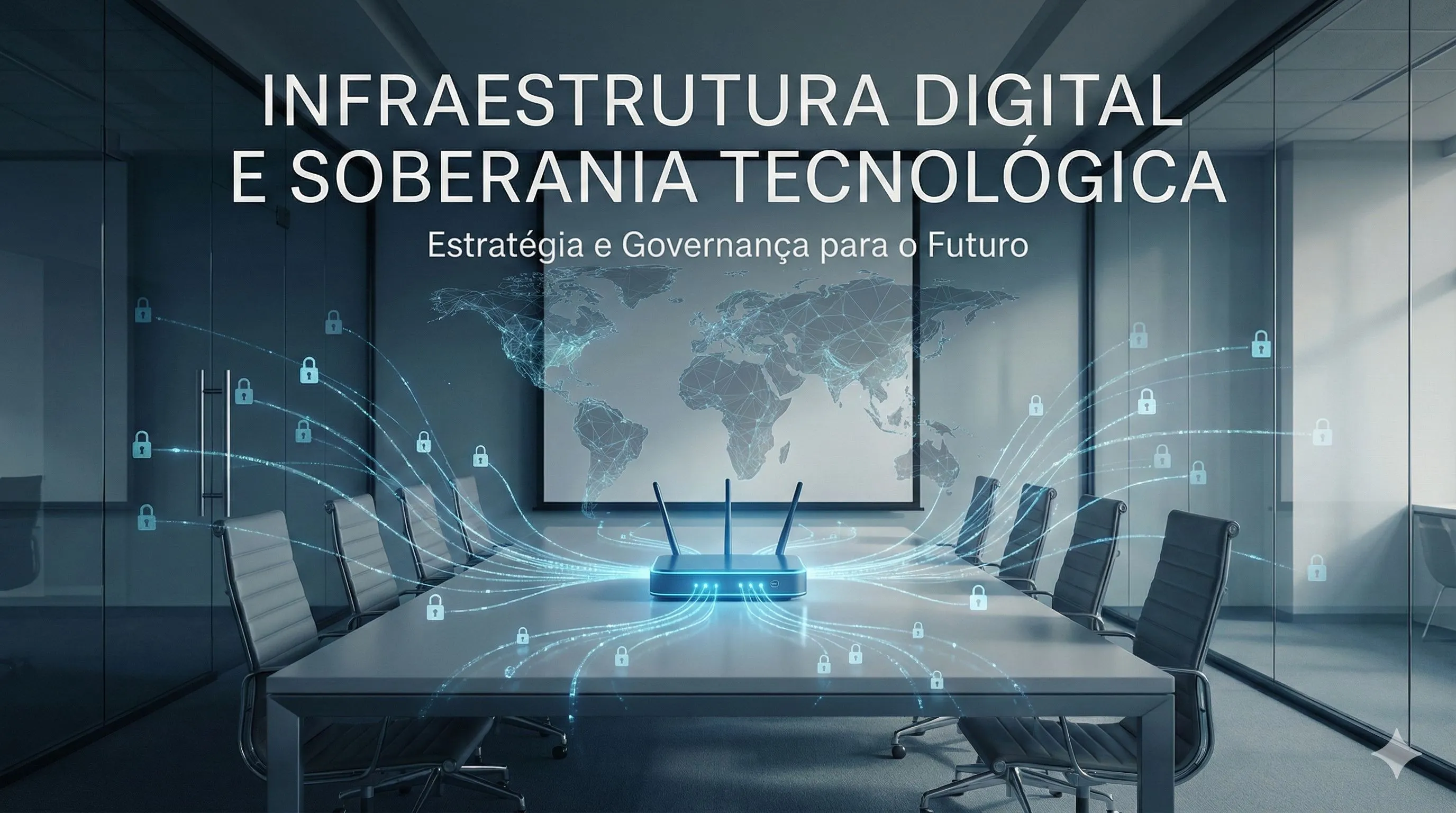
The recent controversy involving TP-Link routers in the United States has reignited a debate that goes beyond a single brand or manufacturer. Intelligence reports from Microsoft indicated that hacker groups associated with China exploited thousands of vulnerable devices to compose networks used in international attacks.
The episode quickly gained political dimension, including state lawsuits and discussions about possible trade restrictions. However, from a technical perspective, the central issue is less geopolitical and more structural: the fragility of connected domestic and corporate infrastructure.
What is at stake is not just a brand
So far, there is no public proof that the devices leave the factory with official backdoors. What has been identified are vulnerabilities exploited on a large scale — many of them related to:
-
Outdated firmware
-
Default settings
-
Exposed administrative services
-
Already documented security flaws
This scenario is not exclusive to one manufacturer. It is a recurring reality in the global chain of connected devices.
The discussion, therefore, should not be limited to the origin of the hardware, but to the maturity of digital governance adopted by companies, governments, and users.
The invisible infrastructure has become strategic
Residential and corporate routers are no longer mere connectivity devices. Today, they are critical access points to:
-
Corporate data
-
Remote work environments
-
Financial systems
-
IoT devices
-
Hybrid and cloud infrastructures
When neglected, they become silent vectors of risk.
The TP-Link case highlights a larger trend: digital conflicts increasingly pass through everyday devices.
Digital sovereignty demands more than trade restrictions
The discussion about technological sovereignty involves global supply chains, national legislation, and strategic disputes. However, real security begins at the technical layer.
Effective public policies need to consider:
-
Continuous firmware certification
-
Independent security audits
-
Transparency in the component supply chain
-
Digital education for consumers and companies
-
Encouragement of updating and responsible disposal of obsolete equipment
Simply replacing brands does not solve the structural problem.
The role of companies and organizations
For public and private organizations, the lesson is clear:
Security is not just firewall and antivirus.
It is risk management at the network base.
Good practices include:
-
Periodic firmware updates
-
Network segmentation
-
Traffic monitoring
-
Review of administrative credentials
-
Periodic evaluation of local infrastructure
In a scenario where attacks use home devices as intermediate infrastructure, ignoring the initial layer of the network is assuming strategic risk.
A strategic reflection
The digital economy is built on distributed infrastructure. The more connected we are, the more we depend on the integrity of these seemingly simple points.
The debate about TP-Link should not be conducted from an alarmist perspective, but rather as an opportunity for institutional maturity.
Information security today is a matter of governance.
And governance begins at the network base.